Showing posts with label movies. Show all posts

Monday, July 23, 2012

Movie Review of Nashville

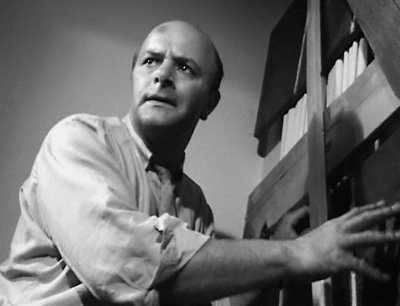
The 59th movie on AFI's list is the Robert Altman film Nashville.  It's a typical Altman film with a giant ensemble cast, realistic dialogue and a rambling plot.  It follows a few days in Nashville's country and gospel music industry in the 1970's. 
I wasn't a huge Robert Altman fan before I saw this film, and I'm still not.  You would think that with realistic characters and authentic-sounding dialogue, a film would be interesting.  But Nashville is not.  I would even say that it is unspeakably dull.  Because the camera's attention wanders in and out of characters' conversations and doesn't cut during the boring parts, my attention span did the editing for Robert Altman by drifting in and out of the movie.  Things my wife was doing, the antics of household cats, the weather, and lint between my toes at various times were more interesting to me than the action on-screen. 

The movie's music is meant to be a snapshot of the real Nashville's music in the 1970's.  And boy-howdy, country music was in a bad place back then.  On the scaffolding of cowboy ballads, folk music and songs about unfaithful wives was built a teetering Babylon of maddening pretention where untrained singers screeched above full orchestras, when early synthesizers beeped and booped next to the howl of slide guitar, when nauseating, nasal male voices told you in no uncertain lyrics exactly what to think.  The lumbering adult-contemporary beast opened wide its maw, gobbled Hank Williams Jr. and took a shit on 70's culture.  That rhinestone-encrusted piece-a'-shit was country music from this era. 

Nashville is many things bad.  It's a black comedy that isn't very funny.  It's a snapshot of a musical genre that deserves infamy and scorn.  It's another reason I have to curse Robert Altman's name and progeny, and yet another selection from the supposed 70's golden age of cinema that just bores not just the hell, snot and shit out of me, but the lymph, earwax and spinal fluid. 

In conclusion: Fuck.  Nashville. 
1/2 a repetative refrain of "It Don't Worry Me" out of 100

Tuesday, April 17, 2012

Movie Review of Sullivan's Travels

...And another giant break between AFI movies.  Anyway, we just watched #61 on AFI's list, a comedy called Sullivan's Travels.  It was released in 1941, directed by Preston Sturges and stars Joel McCrea and Veronica Lake.

The story is about a film director named Sullivan who has grown weary of making schlocky comedies and shallow musicals.  He wants to direct a movie called O Brother, Where Art Thou?, an epic that captures the struggles and plight of the common man.  His collegues chide him for knowing nothing about the struggles of the poor.  Undeterred, he dons hobo clothes and runs away to sample life as a migrant worker.  As he travels, he prompts people to talk about their troubles, but discovers nobody is in a big hurry to bemoan the plight of the common man.  He meets "the Girl", many misadventures occur, many silent-movie comedies are referenced and many lines of dialogue are delivered snappily. 

As an aside, despite bizarre claims by old movie posters for this film which proclaim that "Veronica Lake is on the Take", Veronica Lake at no point appears to be on the take.  I can only assume that this genre-defying movie left studio publicists mystified as to how to market it.  Scratching their heads in confusion, somebody suggested, "We need somethin' that rhymes, see!  Who cares if it don't make sense?"

***SPOILERS AHEAD***

What makes this movie different is that it has a fourth act in its story structure.  After Sullivan and the Girl spend an appropriate amount of time learning hardship and having zany adventures, they return to the studio in triumph.  Normally, a movie might end here.  However, Sullivan decides to don his hobo clothing and repay the poor he lived with a stack of $5 bills.  He is promptly robbed at a trainyard and tossed unconscious onto a departing freight.  His robber is mangled by a train and his corpse mistaken for him.  Meanwhile, the groggy Sullivan lashes out at a railyard guard and is sentenced to six years hard labour.

It is here that the film abruptly changes tone to a drama.  Miserable, overworked and persecuted, he learns real suffering.  He spends a day in the hotbox for reading a newspaper.  At his lowest point, a revival congregation allows the chain gang to watch a Mickey Mouse cartoon in their church.  All his troubles melt away as he howls with laughter at Pluto's antics.  He realizes then that he doesn't want to direct O Brother, Where Art Thou?  He sees that if he wants to help the common man, more good can be accomplished through laughter.

***END SPOILER ZONE***

And that's the message of this movie, recalling the film's dedication at the beginning:
To the memory of those who made us laugh: the motley mountebanks, the clowns, the buffoons, in all times and in all nations, whose efforts have lightened our burden a little, this picture is affectionately dedicated. 

It's a message that could have gone terribly wrong.  For in order to tell the message that "laughter is the best medicine", the film loses all its laughs during the fourth act.  It's risky business and some might accuse it of hypocrisy.  However, in my opinion, the film pulls it off.  Perhaps its hand is heavy, but it is moving in its own way.

It's a pretty good film.  The laughs vary from slapstick to wordplay to high-concept comedy.
4 1/2 unscheduled returns to Hollywood out of 5

Tuesday, April 3, 2012

Eyeball Soup for the Soul

For years, horror has been regarded as the lowest form of entertainment. Cultural elites believe horror is a playground for mankind's basest nature, where pubescent boys indulge their appetite for bloodletting and jiggling boobs. Church fathers regard it as a refuge of corruption where the innocent can be lured to sin by Satanism. Other people just think it's gross.

Well, I'm here to tell you today that horror can make you a better person. For lurking within horror's black heart are ethics, humanity, hope, intellect and wisdom. You have to know where to look. Every genre has its own tropes, and it is in these ideas and cliches that horror's morality can be perceived. Here are the most common and what we can learn from them. They are simple moral lessons that we often forget.  

1. Characters Questing for Forbidden Knowledge bring Doom
This is usually how all the trouble starts. It can be somebody delving into evil tomes that should not be read by human eyes, a common theme in H.P. Lovecraft. It can be scientists experimenting in realms of knowledge without considering the consequences, a theme commonly seen in Atomic Age horror. However, it's not just in the concept that characters investigate things they should just leave alone. How many times have you stared at a movie screen and willed a character not to go into that house, not to go outside to see where the dog went, or just DON'T OPEN THAT DOOR!?

The reckless attitude of horror characters can best be shown in the 1999 piece a' shit, Bats. When asked why he created a race of malevolent, super-powered bats, their creator answers, “Because I'm a scientist! That's what we do! We make things better!”  

The Lesson: Curiosity Eviscerated the Human
The 21st century promises any number of humanity-threatening disasters, thanks to mankind's own ingenuity, inventiveness and curiosity. Millions of us could die as the result of global warming. Or self-aware robots. Or self-replicating nanobots. Or, of course, the old favourite nuclear annihilation.

Horror asks us to consider why we're researching creepy stuff like crowd-control microwave cannons. It asks us to consider the implications of programming artificial intelligence that can learn. It asks us to think about the far-reaching consequences of building a nuclear reactor in, say, a place with lots of earthquakes and accompanying tsunamis.

Are some forms of progress worth the danger and loss in human life and dignity. At the very least, horror asks us to proceed with caution. So, to the scientist who is currently working on the project to invent the big red button that destroys the universe (and I know you're out there somewhere), please give some sober thought to inventing something actually helpful, like cars with sewage engines or a cure for pop music.  

2. The Skeptic

"Mulder, there's no such thing as stuff."

A stock character in the horror genre is the skeptic. Oftentimes, the protagonist begins the story as a skeptic. From a story perspective, the skeptic is an agent of the world that audiences find familiar, a world that is unpopulated by horrible, incomprehensible things. The skeptic sympathetically latches to old beliefs about reality even if something overtly supernatural kills somebody. They constantly try to convince other characters that they are safe. Their single most common line of dialogue is some permutation of, “There has to be a rational explanation for all this.”

Or, as Dr. Roger Fleming from The Lost Skeleton of Cadavera says, “Ranger Brad, I'm a scientist, I don't believe in anything.”

 As appealing as the Skeptic's arguments can be, unfortunately they are wrong wrong wrong. The monsters are real and they are dangerous. In order for Horror protagonists to deal with their new reality, they must stop listening to the skeptics and confront the problem. As for the skeptics themselves, they frequently discover the hard way that vampires are real.  

The Lesson: Don't Cling to Old Ideas if they are Proven Incorrect

I would like you to think about your least-favourite politician. How many times have you cursed this politician as being evil? Stupid? Corrupt? A liar? Have you ever been watching them speak and turned them off because their words make you furious? Have you ever shared an article about what a bad person this politician is with friends on Facebook and felt better as likes and sympathetic comments pour in?

Yes, you have. Everybody does it. Your least-favourite politician represents a threat to your belief system. The anger you feel is the result of cognitive dissonance, the tiny voice in your head that whispers that you are wrong. We all hate this feeling and when we are presented with information that contradicts us, we spurn the messenger, downplay the information, or seek comfort with like-minded people.

We may be right to do so, because sometimes other people really are deceitful or incorrect. However, somewhere in your life, right this instant, a there is something in your life that is making you unhappy. This issue may be difficult to see at first, but if you need hints, you need only think about stuff that makes you angry or tearful. Work from there. What is your unhappy truth that you won't admit? It can be causing depression. It might even be killing you, such as if you are a smoker, alcoholic, or over-eater. Ignoring it isn't helping. Identify it. Your proverbial vampires can still hurt you, but to slay them, you have to know that they exist.  

3. Isolation
More than any other genre, horror isolates its protagonists. This isolation can be physical, such as the uncharted wilderness cave of The Descent. It can be social, such as when characters seek help from indifferent or hostile authorities, or worse yet, authorities who are in league with the baddies, such as Body-Snatchers!

The characters must know that no help is coming, not God, not the cavalry. If help is on the way, you can bet that it will be thwarted. Even when the protagonists ARE the cavalry, such as in Aliens, they will soon find themselves beyond help and hope. In that movie, the Colonial Marines, the universe's ultimate badasses, find themselves reduced to whiny, helpless children when their dropship crashes. Game over, man!

The Lesson: Only You can Solve Your Problems
Life is our horror flick. When it comes to our personal issues, we are as alone as any horror character. Remember that hidden, wicked truth about yourself that is lurking within your personality? Nobody can confront that issue but you. A therapist, counsellor or priest might assist you, but only you can actually take the steps to solve your problem.

Self help-types agree:  
The most important aspect of taking responsibility for your life is to acknowledge that your life is your responsibility. No one can live your life for you. You are in charge. No matter how hard you try to blame others for the events of your life, each event is the result of choices you made and are making. “Gatekeeper”, By S Miriam Clifford

Once you have seen your truth, deal with it. You will take steps closer to the person you want to be.  And when your life fades to black and humanity's ultimate monster, death, creeps upon your soul, you will not be the cringing idiot who claws at his deathbed and screams, "I'm not ready!"  You'll be able to grunt something awesome like, "Take me, ya sonofabitch.  I had a fuckin' good run!"   

4. The Crazy Plan that Might Just Work
Horror monsters are usually immune to conventional problem solving. If dealing with them were as simple as negotiation or shooting them, they wouldn't be scary. Luckily, they usually come with disastrous heels Achilles'. While common in other genres, a Crazy Plan that Might Just Work is almost required in any horror story.

This exploitable weakness might be as simple as a vulnerability to silver. Or perhaps the portal to the other dimension can be sealed if the streams of the proton accelerator packs are crossed. Or maybe a virus can be downloaded into the invader's navigation system. Whatever the solution, it possesses the power to completely neutralize the baddy and its minions.  

The Lesson: Every Problem Has a Solution
The message here is one of hope.  The characters of horror movies often best the vilest, most violent and supernatural opponents the human imagination can dream.  Their problems are so much worse than yours, yet they succeed.  Every problem you face also has a solution for somebody clever enough to see it and brave enough to use it.

To quote Stan Rogers, singing from beyond the grave:  
Rise again, rise again—
though your heart it be broken Or life about to end. 
No matter what you've lost, be it a home, a love, a friend, 
Like the Mary Ellen Carter, rise again.

 5. The Misunderstood Monster
The last few years have seen a parade of movies involving dead little girls annoying protagonists with their antics, only to have the hero help them solve their murders. The Sixth Sense, Stir of Echoes and What Lies Beneath come to mind. They are a common manifestation of another stock character, the Misunderstood Monster.

For me, the most memorable Misunderstood Monster of my childhood was the Pale Green Pants with Nobody Inside them, the antagonist of Dr. Seuss' story, “What was I Scared Of?” It's silly now, of course, but I know there are more than a few kids out there who found those pants terrifying. In the story, a hero of indeterminate species constantly meets the spooky pants in frightening locales, becoming progressively unnerved. Finally, he shouts for deliverance, only to discover that the Pants are terrified of him:  

 I never heard such whimpering 
And I began to see 
That I was just as strange to them 
As they were strange to me 

  In the case of the Pants, they become friends. Other monsters offer assistance or information to heroes after they discover the nature of the story's real enemy.  

The Lesson: Losers Make Loyal Friends
Professor Steven Reiss lists 16 basic desires that motivate all people.  Amongst them is Acceptance, the human need to be liked and understood by other people.

Different people rank their desires in different order of importance, but chances are you know a socially inept person who needs Acceptance in a bad way.  If you can practice tolerance and patience when dealing with these misunderstood freaks, you can win loyal allies.

If you are a misunderstood freak yourself, you can always hope that somebody reading this post reaches out to you.  In the meantime, there's always porn.

6. An Asshole Screws Everybody Over, Inviting Unfavourable Comparison to the Monsters
Seen many zombie apocalypse movies? The best ones go like this: in the first act, the heroes run from the zombies. In the second act, they have found a sanctuary from the undead hordes that allows them to talk, love and argue in safety. While the zombies remain a threat, the heroes can deal with them.


Then what happens at the beginning of the third act? An Asshole or Assholes screw everybody over. Mister Cooper refuses to open the door, then tries to take the gun away (Night of the Living Dead). Or Assholes on motorcycles let zombies into the mall (Dawn of the Dead). Or an Asshole-scientist is feeding soldiers to a zombie to make it tame, and when his faux-pas is discovered, Asshole-soldiers initiate a bloodbath (Day of the Dead).

In short, while the zombies are dangerous, it is the conflicts between humans that destroy the community of survivors.  When considering the horror genre in general, Perhaps Ellen Ripley says it best after company-man Burke locks her in a room with some Aliens in an unsuccessful attempt to cover his own ass:   

"I don't know which species is worse.  You don't see them fucking each other over for a goddamn percentage."   

The Lesson: Play Nice and Share
Last summer the world experienced the Occupy Protests.  Large groups of people camped in public spaces everywhere to protest wealth inequality, amongst other things.  One of their slogans was the phrase, “We are the 99%”, referring to figures that the top 1% of income earners are hogging all the wealth while everybody else is left with nothing. If you are unemployed, broke, or suffering from a disease you can't afford to treat, perhaps you know what they're talking about.
They have a point.  Economic inequality would seem to be a bad thing.  Places with low economic inequality include Europe and Canada.  Compare that to places where inequality reigns, places like Botswana, Bolivia and the Central African Republic.  Would you rather live in a place that has peace and prosperity, or a place that has old trucks careening through the streets, packed to the brim like a clown car full of AK-47-wielding child soldiers?

Most people are not serial killers.  However, we can still be monsters.  Like that Asshole in the zombie movie, we become monsters when we follow selfish ends that harm other people, even indirectly.  When our community is harmed, we are harmed.  And someday, like a zombie horde, our selfish actions may bite us in the ass.  The Romanovs were probably kicking themselves over that whole greed thing as they were being murdered by communists.

Right now, people all over the world are suffering, not just in the first world.  It's easy to dismiss these people as “lazy” or “drunks” or “criminals” or “terrorists”.  And you would be right to do so, because amongst the ranks of the poor, there are many layabouts, drunks, criminals, and a smattering of anarchists.  But a lot of them are not pretending.  Those people, right now, are hungry, homeless, in pain and dying.

Personally, I advocate progressive taxation. But that's just me and those of you who are a little more libertarian at heart may find that distasteful. So here's another idea: charity.

Are you a millionaire? Or maybe even a just a half-millionaire? Somewhere in your life, you are considering a purchase you really don't need.  Instead of a second summer-home, maybe a church charity beckons.  Instead of a new yacht, some starving students out there would really appreciate you setting up a scholarship fund.  Instead of buying that Hummer, rush down to the soup kitchen passing out $100 bills and giggling like an idiot.  Spare that brother a dime.

You might actually find it spiritually rewarding. You'll get pats on the back from your contemporaries and you may help avert a communist revolution.  Also, God will give you a personal thumbs up upon entry into heaven.  Everybody wins.

 7. The Horror is Not Over
Any lover of Horror cinema knows well the tiresome scene that happens at the end of hundreds of movies.  It's the one where we see the monster's corpse and it opens its eyes.  Or we see a bunch of baby crocodiles and O noes, what happens when those crocs grow up to be as big as the last one (Lake Placid). Or, surprise-surprise, Freddy returns for one more fatality.

You're supposed to be scared, see, because the scary stuff is still out there, man.  This horror-standard has, no doubt, caused many a viewer to lie awake in bed with the light on, fretting and jumping at night noises.   

The Lesson: Evil Can Never Truly be Destroyed
We got that sonofabitch, Adolf Hitler, the most evil man ever.  Huzzah for us, we sent a murderous madman to hell.

Now we just have to forget that the evil Joseph Stalin never paid for his crimes.  We also have to forget about how Mao Zedong ravaged China.  Now forget that hundreds of bloodthirsty dictators have emerged since 1945 in countries all over the world, bathing the earth in blood.

But we cannot forget.  For evil still lurks in the heart of our species.  Evil dwells in the sneer of a miserly employer, the cackle of a snobby country-club madam and the baton of a racist cop.  Evil will exist as long as there are humans.

What does that mean for you? That's a complicated question, and it's up to you to answer. I will ask you these questions to help you ponder. What is evil? And, does somebody you know view you as evil? Are you okay with that?

***
That's enough observation for now. Every horror story has a moral, even if it's drowning under gallons of blood. Next time you pop in a crappy horror flick, ask yourself what it's trying to tell you.

Or don't. Hey, look at the naked woman getting killed!

http://pharoahphobia.blogspot.ca/

Friday, March 23, 2012

My Letter to Premier Brad Wall in support of the Film Employment Tax Credit

Recently, the Government of Saskatchewan announced its intention to axe the Film Employment Tax Credit. Here's how I feel about it. A copy has been sent to Brad Wall. If you agree, if you have worked in the business, if you have felt the positive effect of Saskatchewan's film industry, or even if you enjoyed watching Corner Gas, you really ought to contact the Premier yourself and ask him to continue the incentive.
----

Dear Premier Wall,

My name is J. Adrian Cook, writer and musician from Harris, Saskatchewan.

I dread the end of the Film Employment Tax Credit. This is not because I am planning to film in Saskatchewan. My dread is also not for my writing career, though it may limit my options as a screenwriter. My dread is also not for my future on set, though I have been sustained in the past by roles as an extra and production assistant. My finances will not be directly stung.

The reason for my dread is that I will say goodbye to so many friends. These are people who work in the film industry and whose livelihoods will be devastated. For years, they have made their living from foreign production companies enriching in our province. Now, these companies have little reason to film here. Their money will evaporate. If my friends wish to follow their dreams or even sustain themselves, they will have to move to Vancouver or Toronto.

I am no economist. I cannot speculate on the monetary result of the cancellation of the incentive. However, I can accurately speculate what will happen to my friends.

I am friends with screenwriters. For them, the end of the program will affect them slowly. Writers can write anywhere, but it helps to be near filming. Making film connections is important for them and if they cannot make them in Saskatchewan they will have to leave.

I am friends with actors and grips. These people can find work in local professional theatre if they are lucky. However, this is a limited job market and it will not provide for them. They will leave sooner.
My unluckiest friends are the directors, cameramen, and production assistants. For them, there is no substitute: they need film or they starve. They will leave soonest.

I seem to recall the Saskatchewan Party criticizing previous NDP governments because of a brain drain. Ending the Film Employment Tax Credit will send hundreds of our brightest citizens packing. Me and my province will be poorer, lonelier and sadder.

Please reconsider cutting this program.

-J. Adrian Cook

Monday, December 26, 2011

Let's Do Something

As a man of independent mind, it has been a hard lesson learned that it takes two, baby.

So let's do something. Yes, we may live in different places. Many things can be accomplished over the internet, by phone, or via weekend visits. It's a new year and I am mentally prepared to cooperate and collaborate.

But what should we do? The hell if I know. Let's talk about it. Surely we have complimentary skill sets. We'll seek others within our friend circles with similar interests. If we all work together, we can accomplish something spectacular. Or maybe not! Maybe we'll just play something. Or maybe form a club or circle?

Examples:
A writing group, an artistic collaboration, a band, a company, a book club, a secret society, a gaming circle, a roleplaying campaign, a short-story compilation, a video-game clan, a child-care coop, or simply a group of drinking-buddies.

Or perhaps you have your own ideas? Get in touch and we'll talk about it.

Wednesday, August 24, 2011

Review of "My Year of Flops" by Nathan Rabin

Watching bad movies has been a favourite pasttime of mine for almost two decades now. I'm not alone in this questionable activity and different folks derive different strokes therein. Some enjoy feeling superior to others. Some come for a laugh. And some, and I admit I am guilty of this, enjoy inflicting bad movies on others for the sadistic joy of watching somebody else cringe. In any case, I've seen more than my share of cinematic shit and I fear that it has warped my sensibilities.

My quest for awfulness has led me to read several books about bad movies. Such books are essential for seeking movies that have otherwise escaped notice. Most of them adopt a snarky tone and give play-by-play accounts of the worst aspects of the films. The better books provide backstory to showcase production follies and the devatating effect on the careers of those involved, as well as contacting members of the cast and crew and allowing them to reminisce.

My Year of Flops, by Nathan Rabin, senior editor of The Onion's AV club, has all the best qualities that a rotten movie book should. However, the aim is different. Whereas other movie books have been written exclusively to mock, Rabin watches bad movies to find undiscovered gems. It is well known that if art and entertainment are misunderstood in their time, the public can punish the artists involved with mockery and shunning. When Nathan Rabin watches a notorious flop, he tries to see the good in each of these creations. However, if there is no good to be found, mockery ensues.

Those of us who revel in cinematic garbage know that there are several types of bad movie. To be avoided are movies that purposefully try to be awful and fail. Many such films are created every year and, surprise-surprise, it actually takes talent to purposefully make a cheesy movie. The result is an awful lineup of shitty horror movies that try to bad and hope that snarky viewers like myself will watch for a laugh. The result is usually excruciating. Sorry guys, the best bad movies are sincere efforts that have gone awry. My Year of Flops is composed entirely of sincere efforts.

Rabin has three ratings in his system: Failure, Fiasco and Secret Success. A Secret Success is a film which he feels is actually good, but misunderstood. A Fiasco is a film that is filled with love and effort that has gone horribly wrong, resulting in hilarity. A Failure simply has nothing going for it. It's a useful way to sort. Those who wish to find secret successes can seek them. For the rest, the Fiasco/Failure ratings are an excellent way to separate the hilarious from the irredeemably horrible.

Rabin's writing is charming, often following his stream of consciousness which invariably leads to the river of sewage that is his "case". He often begins his case files talking about some other bad movie, waxing witty on a thought which helps illuminate his subject. My only complaint with the writing is that often it seems like Rabin is playing to an audience which has already seen the movie in question, rather than introducing an outsider to the madness.

There are too many movies to list here, but some highlights include "The Conqueror", featuring John Wayne playing Genghis Khan in the role that would kill him, "Battlefield Earth", wherein John Travolta plays a hulking alien overlord to appease his Scientologist masters, and one of my personal favourites "Southland Tales", featuring an ensemble cast in a senseless story set in an incomprehensible future that constantly leaves the viewer giggling, "What the hell is going on?" Rabin concludes with his tortured minute-by-minute notes as he watches the director's cut of "Waterworld". Ugh.

My Year of Flops is clever and charming. Readers who are having a lousy day need only pick up the book, read a single case file for ten minutes, and I guarantee their quality of life will be improved. Nathan Rabin is obviously passionate about cinema and it shows in his writing. He loves to sift bad movies to find a good performance, a beautiful shot, a truth, a cool idea or an excellent line of dialogue. When he finds one, his praise is touching. When he can't find one, his commentary makes me laugh out loud. It's a marvelous masterwork of mockery, a must for movie masochists!
4 1/2 manic pixie dream-girls out of 5

http://pharoahphobia.blogspot.com/

Tuesday, June 21, 2011

The Faceless Enemy

Since fiction has existed, hordes of incompetent foes have assailed heroes. These foes are a literary device which, at first, encourages audiences to fear villains by making them seem formidable. Then the foes get blown away and the secondary literary function is achieved: the hero looks very tough indeed. When these foes appear in a visual setting, such as theatre, comics, film or video games, these foes often have their faces shrouded or hidden. It's a tradition that I'd like to examine.

The Faceless Enemy has a long history. The earliest example I can remember with any clarity is the ninja. The famous shinobi shōzoku outfit that we all know, the all-black costume with the facemask, puffy pants and two-toed shoes, was very likely never used by actual ninja. Rather, it was a symbolic stage-convention of Japanese theatre that would allow audiences to easily identify a character as a ninja. It's a cool-looking costume that sticks in the viewer's mind. No wonder that it resonated over hundreds of years in Japanese culture and was copied by North American filmmakers in the 1970's. Many heroes have donned the awesome ninja garb, but when enemies do so, they are frequently very bad at their jobs.

Of course, the most famous Faceless Enemy these days is the Imperial Stormtrooper. For over thirty-five years, the Stormtrooper has been a pop-culture icon. However, we must not forget that the Imperial Stormtrooper was a dream inspired in George Lucas' mind by the Faceless Enemies that Flash Gordon and other cheapo-serial heroes fought in the early days of cinema.

In the world of video games, you will be playing an exeptional game if you AREN'T killing Faceless Enemies. From the masked-enemies of Borderlands to the shrouded reapers of Infamous to the balaclava-terrorists of Rainbow Six: Vegas 2, they are the industry standard. The reason for this is that it's just easier to program a certain number of enemies for the player to murder and if they don't have faces, it's less likely that the player will say, "Hey, didn't I kill that guy already?"

You get it. They're everywhere. But why? What is it about Faceless Enemies that we seem to like so much? Why do we like seeing them getting killed? It seems to make no intellectual sense. As a writer I am told over and over to fully-flesh my antagonists, yet fiction is rife with cartoon baddies Wilhelm-screaming and falling off roofs.

The enemy who has his face hidden is an enemy who has been dehumanized. Humans have instinctive reactions to seeing each other's faces. When the face is shrouded, those instincts are deadened.

This has two major effects. Fistly, for audiences, we cease to identify with the enemy. It just won't do for viewers to sympathetically exclaim, "Han Solo, you brute! That poor Stormtrooper! Did you think about his family when you blasted him?" This allows heroes to plow through hundreds of faceless foes, letting audiences worry only about the protagonist's peril.

The second major effect is a by-product of the first. When we have our sympathetic reactions to death impaired, it affects censors like the MPAA and the ESRB less. Dead Stormtroopers make for PG-ratings in theatres, at worst Teen ratings in video games. By putting a mask on your baddies, you are making your story available to millions of bloodthirsty children.

Okay, so that explains why creators select the Faceless Enemy. But why do audiences find them compelling? I've mentioned that the mask dehumanizes them, but with dehumanization also comes fear. The mask represents mystery and fear of the unknown. The emotions of a Faceless Enemy cannot be read except by body language, making their thoughts a mystery as well. With the identity hidden, the Faceless Enemy becomes a menacing stranger. Menacing strangers are a powerful human fear, as evidenced by the amount of media attention random murders, child-snatchers and serial killers receive. Lastly, when the Faceless Enemy serves a political entity such as an empire or terrorist group, he becomes a symbol of powerful conformity that has obliterated his identity, quietly whispering to the viewer, "This could happen to you, too."

In short, as a literary device, Faceless Enemies can inspire terror in the human heart. By including them as followers of your antagonist, (who should remain fully-fleshed), they significantly enhance his/her fear factor. Are you still worried about allowing poorly-fleshed characters into your work of fiction? Remember that the way to be a bore is to say everything. Unless that gas-masked Nazi is going to play a significant role in your plot, we don't want to know about him. We don't even want to know that his name is Hauptfeldwebel Helmut von Pickelhube. Just let your protagonist murder him and move on with the plot.

Believe it or not, this diatribe has real-life application. In his book, On Killing: The Psychological Cost of Learning to Kill in War and Society, Lt. Col. Dave Grossman showcases the innate human resistance to killing other humans. Apparently, before the Korean war, only about 15% of soldiers actively tried to shoot their enemies. The rest helped wounded comerades, reloaded weapons, cowered in fear, ran around shouting like idiots or fired their weapons over the enemys' heads. Generals like Carl von Clausewitz were confounded as to why, when a Prussian infantry formation fired a musket volley at a barn, all the shots hit, whereas when the same formation fired at an advancing line of tightly-packed infantry, only one or two enemies dropped. The closer you get to your enemy, the harder it is to overcome the urge not to kill him. A pilot can easily fire a torpedo at a battleship and sink it, killing who-knows-how-many soldiers, but the same man may freeze and be unable to bayonet one enemy in close-combat.

Modern training and drilling techniques have been introduced to overcome the resistance to kill. It also helps to have a superior officer yelling at you to kill. The American military also makes extensive use explosives and snipers, which kill at a distance rather than forcing up-close confrontation.

But by far the most time-honoured tradition of getting soldiers to kill is the art of dehumanization. From the made-up stories of the barbarious Hun mutilating innocent Belgians in World War I to the bullshit story about Iraqis tossing babies out of incubators, governments have been using real and fake propeganda to encourage soldiers to kill. If a soldier can view the enemy as degenerate subhumans, he/she can pull the trigger with more ease.

So here's the point of all this. Many special forces, SWAT teams and guerillas purposefully hide or cover their faces when they go into combat. Sometimes it's a balaclava meant to hide the wearer's identity. Sometimes it's facepaint to assist camouflage. Sometimes it's infrared goggles. Sometimes it's a gas mask to protect against airborne toxins.

Considering what Dave Grossman has to say and how audiences react to fictional Faceless Enemies, it might be worth examining the wisdom of hiding the face. Camouflage, anonymity, night vision and protection from chemicals have their uses. But by hiding the face, these soldiers and police are dehumanizing themselves and becoming more attractive targets. In situations where the enemy has no modern military training, this is especially important. An untrained fighter is more likely to shoot a menacing mask than a real person with a human face.

If this is something that soldiers and commanders consider before they enter combat, that's good. I'm glad to hear it. But otherwise, it's something to think about. Obviously there will be other tactical considerations in any engagement, but if I were a soldier (and I'm not), I'd think twice about putting on that balaclava.

http://pharoahphobia.blogspot.com/

Sunday, May 8, 2011

The Ten Worst Canadian Things... Ever!

Canada struggles for its identity. It hovers in the shadow of the United States, an economic and cultural powerhouse. Many seek to define Canada by what it isn't and produce a litany of cultural and historical characteristics that make us not the USA. Others point to Canadian victories in war (the reputation of fighting Canadians in the World Wars), victories in politics (Arts Boards, Medicare), victories in science and technology (insulin, the Canadarm, the telephone), or victories in sports (uh... there's probably some real-good sports victories out there to mention but I honestly don't give a fuck).

But let's face it. If we're going to be a real culture like the United States, we need, NEED, a list of bad things to define us. The US has a history of slavery, a bizarre half-assed colonial thing, unbelievable poverty in the midst of immense wealth and a weird news-media culture that can only be called a triumph of the subjective. As Canadians, we can look at these things and say, "See? We didn't do that. We're better than those awful Yankees." If we ever want to be taken seriously, we need a list of faults, bungles and morons that any American can see and say, "Thank God, thank God I'm an American!"

THIS IS THE LIST.

Here are the rules by which the list is compiled. The things on this list must be Canadian icons, people or influences that reached beyond our borders and spread their cancerous filth like gangrene upon the world. Canadian politicians are off the list because they're too easy and, also, one man's hero is another's devil. So as much as I want him here, Stephen Harper is safe. I have also omitted serial killers like Robert Pickton and Col. Russell Williams because, once again, they're too easy, nor do they have much comic potential. Now begins the countdown:

10. Krantz Films, Inc.

Perhaps you've never heard of Krantz Films. No actually, you have, though you were very young when it scarred you. For it was Krantz films that was responsible for those awful, lazy Rocket Robin Hood cartoons and, more famously, the Spider-Man series of the 1960's. The cartoons produced by this animation house can scarcely be called animation. When movement occurs, it is choppy and sloppy. Footage is re-used shamelessly.

"Come on, J. Adrian," you might say if you were in-the-know, "Krantz didn't make anything lazier than any other two-bit animation house of that era. Remember The Fantastic Four, The Hulk and Mighty Hercules cartoons?" Yes. But even they did not sink to this low: plots were re-used. Remember Dementia 5? You should, because both Rocket Robin Hood and Spider-Man traveled to Dementia 5, had the same acid-inspired adventure and in the process terrified two generations of children. Lame lame lame! Canadians did that.

9. Lord Black of Crossharbour
What's better than a rich, criminal media-baron? A rich, criminal media-baron who also happens to be an arrogant windbag, that's who. And it's Canada's very own Conrad Black. Or, I should say, was Canada's own, because he's renounced his citizenship to become a British Lord.

Hating free-speech seems like a strange trait for a newspaperman, but that's our Conrad. He and his supervillain wife, Barbara Amiel, have been a pair of howler monkeys in Canada's tree, annoying Canadians with their right-wing views for over twenty years. Black was so widely-hated that when Queen Elizabeth II wanted to make him a Lord, then-Prime Minister Jean Chrétien intervened and argued that a Canadian cannot be made a Lord. That's when Black renounced his citizenship. Yay! Later, of course, he was convicted for fraud and obstruction of justice in the US. More good stuff. I hope you're enjoying Lord Black, Queen Elizabeth II. We don't want him back.

8. The Heavy Metal Movie
Have you ever wondered what would happen if a stupid glowing green ball called the Loc-nar was the cause of all evil in the universe? I didn't think so. And judging by the significance the Loc-nar plays in each of the short films in Heavy Metal, neither did the creators.

Yet the Loc-nar provides "unity" to the rambling tales that comprise Heavy Metal. It forces a little girl to watch scenes of ultimate evil which frighten her. Yet the ultimate evil she beholds include a bald barbarian congregating with topless chicks, some aliens getting high on a substance named Nyborg, a dastardly space captain and some more topless chicks. Scary stuff. Now, if the Loc-nar's evil plan was to bore us to death, I'd believe it.

No, really. Somehow the movie manages to make blood-spattered topless warrior chicks boring. The animation is painfully slow. The plot is constantly interrupted by "music-video" segments which might be appealing if you're stoned. SCTV alumni and Harold Ramis as voice talent could not save it. It's one of the most famous movies to be produced in Canada and it sucks Nyborg.

7. Apartheid
Bwah? Well, rumour has it that during a trip to Canada, visiting South Africans observed our system of Indian Reserves. "What a great idea!" they said, "We should do that to our black people!" They took it a step further. Several steps, in fact, leading to one of the most racist and evil policies of planet earth.

Only #7, you say? Surely this is worse than Celine Dion? Yes, but Canada doesn't get full credit. Our exclusionist policies only inspired Apartheid, after all. Realistically, Canada need only feel guilty about confining our aboriginal peoples to the least-wanted farmlands available to teach them agriculture, stealing the food we promised them and refusing to give them jobs for a hundred years.

Nah, let's just ignore that issue. It's easier.

6. Tom Green
Okay. I'll admit it. I did not see the manifestation of Tom Green's true talent, a little film called "Freddy Got Fingered". By the time it was released, I knew better. Reports that it was one of the worst movies ever made confirmed my prejudgments.

I had previously watched the Tom Green Show. I knew his shtick. The usual show would go something like this: Awkward onstage banter. Tom drinks some kind of bodily fluid. Cut to Tom with something stupid on his head irritating people in a public place. I change the channel.

Don't get me wrong. From a comic perspective, there is nothing wrong with taboo humour, whereby social norms are broken. I've watched and enjoyed enough Sacha Baron Cohen and Kenny vs. Spenny and know what it looks like when it's done well. Tom's brand of taboo humour was limp, aimless and poorly executed. When he pretended to hump that roadkilled moose, he could have created no more potent a symbol. The moose represented Canada's reputation. Or perhaps comedy. I haven't decided yet.

5. The Royal Canadian Mounted Police
I will receive disagreement from many quarters for this one, but I fervently believe in my choice. Things have changed since the image of the dutiful Dudley Do-right were formed in the consciousness of the world. The RCMP has since forgotten that it is a national police force and not a political entity or a business.

Like most police forces, it has the usual array of brutalities against protesters, questionable taserings and invasions of privacy. What makes the RCMP special is that starting about 50 years ago, it has an odd history of being naughty with fire and explosives: stealing dynamite, burning down barns, and if Wiebo Ludwig is to be believed, staging an attack on a pipeline to frame him. Then there's the time that the RCMP let the Americans know that a muslim(!) Canadian, Maher Arar, was on board a flight in New York. The Yanks quickly bundled him off to Syria to get tortured. That's some nice treatment of our citizens abroad, boys.

Next, the RCMP has been forgetting that it is supposed to be an impartial police force and behaving like a partisan political entity. They used taxpayer money to pay individuals to write negative opinion pieces in newspapers attacking Vancouver's safe injection site in 2008. Then there was the RCMP researching people applying to appear at Prime Minister Stephen Harper's gatherings during the 2011 election, giving helpful tips on who he might not like, and assisting Conservative goons in escorting CITIZENS away from the PUBLIC gatherings! That is not helpful. That is some authoritarian bullshit.

And a final strike against them. We all know the redcoated image of the mountie smartly saluting with his black pants and boots. Did you know that the RCMP sold the rights for this image to the Walt Disney Company for five years? That's great, fellahs. While we're at it, let's license the Canadian flag to Time-Warner. All this adds up to an organization whose brass have forgotten the meaning of the symbolic Mountie: dutiful, friendly, helpful and ready to serve all citizens.

4. Celine Dion
She is one of the most popular Canadian musicians of all time. Of the top ten best selling albums of the 90's, two are hers and a third, the "Titanic" soundtrack, was popular only because of her featured Oscar-winning song.

Her music is the epitome of bland. The second her albums left the charts, we began to hear them piped over the sound system in supermarkets. I know I've heard her music a million times, but for all that, I couldn't name you a single tune except for the one about the big boat and it goes, "Ooooo".

Yet I know there is this invisible class of persons who love Celine Dion, subscribe to the National Enquirer, can be seen shuffling out of scrapbooking shops in sweat pants with weary eyes focused on the pavement, collect animals made out of glass crystal and have no greater joy than when Ellen DeGeneres dances. The following statement is made not on their behalf but from the rest of Canada to the world: We are sorry. We're so, so sorry for Celine Dion. If there's anything we can do, anything at all to atone, please call us when you stop being angry.

3. The Alberta Oil Sands
As the world's oil supply burns into oblivion and prices rise to levels undreamed, you'd think that Canada would be trying to find an alternate fuel source for the future that doesn't cause global warming. Nope. Instead, Canada has encouraged a more expensive, more filthy, more inefficient, more environmentally damaging way of extracting oil from the earth. It requires large amounts of natural gas and alarming amounts of water to do so. Sadly, from a price perspective, it's totally worth it.

It's almost impossible to describe an oilsands development area unless you've been. I haven't visited, but my wife has and it horrified her. I've only seen pictures: vast expanses of sand, filth, machinery and tailings ponds. They dump their industrial waste into these open water pits and position sound cannons around the perimeter to scare waterfowl away. But sometimes mistakes happen and northern Alberta has been witness to many dead, tar-covered ducks and workers.

Oilsand extraction is big business. It makes billions of dollars per year, yet for some reason the Harper government keeps giving them more than a billion dollars a year. They don't need the money, dumbasses! They were going to develop those oil sands anyway because it's extremely lucrative. Quit it!

And lastly, Fort McMurray, which was an awful town to begin with, has grown into a sprawling, poorly-planned blight upon the forest with ONE ROAD connecting all the neighborhoods. Ever seen a traffic jam in the forest? Young people are drawn to the oil sands for the money, find expensive homes in Fort McMurray, get depressed because they're separated from their families and working twelve-hour days, spend their money on abundant booze, drugs and hookers, then get fed up and move home just in time for their partners to ask for a divorce. Fort McMurray, by all rights, should have its own entry on this list, but I've chosen to amalgamate it into the oilsands entry because it is merely a symptom of the oilsands problem.

People are people and we only change during crises, so we will not be rid of oilsand development until the last drop of oil is extracted and civilization is left scratching its head and wondering, "Now whadd'r we gunna doo?" Cheer up! Canadian scientists are busy, busy working on ways to extract oil from oil clay, a method that promises to be even more expensive and harmful than oilsand extraction! Yay!

2. Usage-Based Internet Billing
Netflix has shaken media as we know them. One day it shifted its focus from mail-order rentals to streaming videos on the internet. It offered this service to Canadians for a low price of $8.00 a month. And Canadians were very happy.

They were so happy that they stopped paying stupid amounts of money for on-demand movie and television with their local service providers. Rather than lowering their prices and "competing", as it's called by capitalists, the big internet and television companies whined to the Canadian Radio-television and Telecommunications Commission (a government body which would deserve its own entry if it wasn't a local Canadian thing) and asked it to allow them to charge the small companies who rent their internet lines according to how much data they use. Streaming video, such as that offered by Netflix, uses a lot of downloading capacity.

This has opened the door for an idea called UBB, or Usage Based Billing. Basically, internet companies have put an arbitrary cap on the amount of data Canadians can download. If they go over, they get charged large amounts of money. This led to a storm of complaints toward the the CRTC and the big internet companies. Prime Minister Stephen Harper promised to open an inquiry into the CRTC decision and the Minister of industry threatened them, but so far nothing has happened. Bell and Shaw are planning to make the switch to UBB and have hired their propegandists to turn the Canadian public against itself, claiming there are "problem users" who download massive amounts of data and raise the price for everybody, trying to convince us that people should pay for the amount that they use.

Here's the thing. Let's put aside issues like the facts that UBB is an obvious ploy by monopolists to destroy their enemies and a cheap grab for more money without doing any work. Usage Based Billing is contrary to the vaunted ideas of our Information Age. It might even be contrary to civilization. The internet has always been exalted as a repository of information and entertainment accessable to everbody. With caps on data usage, it means that people will use the internet less to save money. That means that we will be less informed and less entertained. It means that market innovators like Netflix are being punished. But it's not just Netflix that will be affected. The video game industry is relying more heavily than ever on online components to their games and having to worry about download limits will simply make Canada less fun. As computer technology expands, our downloading needs too will expand and I am skeptical that UBB providers will be nice about raising the caps. Also, none of the internet providers have been able to provide a reliable meter that shows exactly how much we've been downloading. In other words, there is no accountability. If Bell says you've downloaded a certain amount, you have to trust them.

UBB is not just one of the worst Canadian things ever, it is one of the worst ideas ever. It is lame beyond imagining. It represents everything that is wrong when monopolism gets confused with capitalism and our own damn government is helping the bastards. I get the sense that the rich and powerful are watching Canada right now, testing UBB on an alternate market like its ketchup-flavoured potato chips before they unleash it on the United States. For the good of civilization, crush, annihilate, destroy UBB before it gets there.

1. "Mister Tambourine Man" as performed by William Shatner
It starts with a classical opening with harpsichord and flute, pizzicatto in the strings. Then the brass and trap set join, transforming the performance into jazz. Then, relentless thumping... a glorious chorus of tambourines! A quiet, tentative voice almost whispers, "Mister tambourine man?" It's Canada's own Bill Shatner, chanting the musical performance that would define him.

It's so bad it's good, then it's awful, then good again and then sublime when Shatner howls the final words, snuffing the music. Shatner's protagonist is a deranged lunatic in the midst of a psychotic break with reality, obsessed with an unfortunate tambourine man, longing to hear the sweet instrument's rattle and clatter. He is rebuffed. He is driven to madness.

Mister Tambourine Man stands as the absolute worst thing any Canadian has ever done, conceived or been.

So,
there stands the list. I may come back and edit it if I think of anything else in the future. As it stands it is a fine example of the worst Canada has to offer. May foreigners look upon it in anger and fear, may we view it with shame. For within it lies the secret to our identity. I'd rise and sing O Canada at this point, but to be honest it's a pretty crappy national anthem.

http://pharoahphobia.blogspot.com/

Wednesday, February 23, 2011

Sex in Canada

...and the title of this blog post alone will give it more hits than any other I've written so far.

I recently watched a Canadian movie by the name of "Young People Fucking". Mini-review: it was hilarious, candid and touching at the same time. Four couples and one mismatched threesome have sex in five separate storylines. It's like a romantic comedy without the hokeyness or the predictability. The dialogue is fantastic. It's a wonderful movie for couples to watch, provided feigned sex and unclothed boobs don't upset you.
4 1/2 awkward interruptions out of 5

A few years ago, Young People Fucking was at the centre of a Canadian controversy. The Conservative Government was set to pass a tax bill by the name of Bill C-10. Buried deep in this document was a section saying that if the government decided that a Canadian-made movie was "contrary to public policy", they could retroactively yank its tax credits. Canadian artists and filmmakers, after the bill was passed, noticed the clause and rallied the troops. The artists (correctly) pointed out that the vague wording would make filmmaking more risky, therefore less-likely to be funded by banks, therefore less-likely to be financed, and therefore less-likely to be filmed. Obviously films of a certain subject matter, as in ones involving sex, are riskier than others. The word "censorship" was touted, a stink was raised and then the issue just kinda faded out. Did the bill get defeated or something?

Anyway, Young People Fucking became the target of the pro-censorship crowd, eager to make this film an example of the kind of pornographic filth that Canada ought not to support. It was an easy target because of its title. But, as is always the case with conservative censorship scandals, the pro-censorship crowd obviously didn't go to the theatre to watch the film and back their claims. If they had, they would have seen how the show was about relationships and communication.

One of the over-arching messages of Young People Fucking seems to be that communication is poor or absent in each of the trysts. If the people involved had engaged in truly open, honest dialogue before they hopped into bed, the sexual experience would be much more rewarding and less awkward.

What a useful moral! We Canadians can be a frigid people when it comes to sex. We possess the urge to hide our sexuality, to repress public displays of affection, to hide our nakedness, and most importantly, secret our feelings. The most conservative amongst us believe that sex is for procreative purposes only, and these people have somehow managed to convince society that sex is bad, naughty and not-to-be-discussed.

And yet surprise babies keep appearing. Unmarried couples retire to shared beds and do it. Half-naked women sing banal songs and advertise products to us. One in every four workers accesses a porn site on the job every day, and even more porn is accessed from the privacy of Canadian homes. The efforts of morally-decent folk to the contrary, sex for social and pleasure purposes is here to stay.

Why do religious people and their prudish allies hate non-procreative sex and the human body? What is the societal consequence that these people fear will happen when their gay neighbors get married and do each other up the poop-chute? What disastrous THING will occur when mothers can freely whip out their tits to feed their hungry babies in public? What cataclysmic event is coming as the result of the internet porn industry?

Honestly, it sure beats me. I'd like to think that if I was a Judeo-Christian religious man, my faith would be strong enough to survive any pornographic assault. But as far as I can tell, sex is viewed as a temptation by these people. The love of Jesus is not always enough to sustain them and sometimes they want to do naughty things. They feel that open displays of sex and nudity will call them to a life of shame and drag them to hell.

Fair enough. But that's not my problem. I'm not religious in that way. Society's mollycoddling regarding sex damaged me when I was growing up and, honestly, I'm still recovering from it. Sex still embarrasses me when I wish it wouldn't. My urge to hide my sexuality still results in misunderstandings, hurt feelings and arguments. It's not my parents' fault. They did their best. If I had to grow up all over again, I think I'd rather do it in a nudist colony than the public school system so that sex wouldn't be such a big goddamn deal.

Canada's absurd obsession and fear of sex is hurting us. The only answer is open, honest dialogue regarding sex between all of us. But that won't happen anytime soon. If all Canadians spoke candidly and truthfully about sex with each other, the prudes would come to the alarming realization that porn, premarital sex, prostitution, homosexuality and adolescent sex are an unchangeable reality of humankind, that indulging in harmless perversions, fantasies and wanking doesn't make you a bad person, and the sexual tastes of other people do not affect the ability of religious people to get into heaven.

Let's take porn as an example. You discover that the people next door filmed a porno flick in their basement and people worldwide are watching it. How does this affect you? It doesn't. It's their business, their everlasting souls and their bodies. They're not going to tunnel into your house and film down there, nor will they force you to have sex with a stranger. The world goes on and if you're religious, Jesus still loves you.

I'll take it a step further. Suppose you discover that a man down the road paid the pretty Ice Cream clerk to have sex. Is your family any closer to hell? Nope. Did he pay your wife to sleep with him? Nope. So who cares? And furthermore, why was their tryst an arrest-worthy crime?

Much of the time, the prudes swell their audience when play the "protect the children" card. Yes, I agree. Children need to be protected. This means stopping predatory pedophiles, pimps and child pornographers from exploiting your child. Kidnapping, sexual assault and fraud are all arrest-worthy crimes.

But when the censors ask us to "think of the children", they seem to be forgetting that, as adults, it is our responsibility not only to protect children, but to teach and nurture them. Sheltering them from sexual information, particularly when they hit puberty, is not the answer. When puberty arrives, children are hit with powerful instincts to have sex, and some will do it no matter how much they have been sheltered.

Consider this: you're watching a movie with your nine-year-old son, Junior. Then suddenly the scrawny heroine whips her top off and starts kissing the hero. Many parents would cover Junior's eyes. But why? He's too young to have sex. He can't even understand why sex is appealing. What harm are those too-perfect boobs causing him? He's not going to have nightmares about boobs stalking him in the forest. Are you protecting him for his own sake, or are you just concerned that if Junior watches the scene, he'll ask a question that makes YOU uncomfortable, like, "Why are those people doing that?" And furthermore, why will it hurt him for you to explain it? His head will not explode, nor will yours. He's going to find out eventually and it might as well be you that prepares him. Wouldn't you rather he found out from open, honest dialogue than from tittering rumours whispered amongst classmates?

I remember when I was a high school student, the Catholic school up the road had the highest teen pregnancy rate of any school in the city. Coincidence? No. This was back in the days when the prudes had convinced the Catholic school board that sex education was a bad idea. Why on earth would you deprive teenagers, once they become capable of having sex, with valuable information about their sexuality? They need to know about contraception and sexually transmitted diseases. Ultimately, as a parent, your child's decision to have sex is not yours. It's theirs. When they have the opportunity to have sex, if they have bad or faulty information, they will make equally bad choices.

I say these things as a new father. I know that much of the urge to protect children comes from a parental desire to keep their offspring innocent. When you raise a child from a baby, it's hard to see them grow up. But grow up they will. It's hard to believe that my little baby will be a woman someday. Honestly, I can't wait. As she becomes a toddler, a little girl, a big girl, a teenager and a young adult, I intend to help and inform her in every way I possibly can. If that means that I'm going to have to weather several uncomfortable conversations, I'm prepared. I will do my best to see that she does not join the ranks of the repressed.

So, dear Conservatives, mollycoddlers and censors: Canada is, or should be, a land of free speech. That means occasionally putting up with opinions, stories and art that you don't like. That includes stuff that's too violent, too sexy, too stupid, too smart and too gay for you. By all means create ratings systems and classifications that tell parents what their children will see in their entertainment. That's useful. Just never tell me what my kids shouldn't see.

If you inhibit entertainment so it fits your mold, you will inhibit open, honest dialogue. There are plenty countries of out there where the government stands for moral decency at the expense of free speech, and do you know what? They all suck.

Even Lot managed to raise a peaceful, God-loving family. That includes two daughters who stayed chaste, and they lived in Gomorrah of all places. If he can do it, so can you. In the meantime, quit trying to impose your primitive, early-agricultural religion on me and my family.

http://pharoahphobia.blogspot.com/

Monday, November 8, 2010

Review of American Graffiti

American Graffiti is a coming-of-age flick set in Modesto, California in 1962. It put director George Lucas in the Hollywood spotlight, made him a millionaire, and was nominated for an Academy Award for Best Picture. It inspired the creation of Happy Days. It is also number 62 on AFI's list, hence my watching.

Despite the praise this film has garnered, I found it to be lame. I recognized it instantly as the inspiration for another film I found lame, Dazed and Confused. Both of these films are slice-of-life, nostalgic, plotless, limp and self-indulgent. They both expect that if they feature some vehicles, showcase some stereotypical characters and make you listen to period music, you'll feel so overcome with nostalgia that you'll forget that there's no story. Some nice kid loses his innocence and his world changes forever. Next.

What is interesting about this film is that it is bad in a way much different than George Lucas' later bad work, before he got obsessed with the Hero's Journey, images moving so fast the viewer can barely see what's going on, and computer animation replacing actors. American Graffiti is very personal, not detached like his later work. There is no absurd urge to entertain the shit out of the audience so much that it's grating. Yet American Graffiti is still lame. It's boring in a very un-Lucas-like way.

Here's a question for you all. We are all aware that if a character expresses concern for the well-being of his car in a movie, something bad is going to happen to it before the end of the picture, usually several bad things. Did American Graffiti start this cliche, or was it well-known even by the time of filming?

Part of the problem is that I wasn't alive in 1962. This movie would be much more interesting to somebody who was. This review sounds like I really hated American Graffiti. That's not the case. This movie isn't terrible, it's just meh with a touch of banal. For me, movies are enjoyable if they're so terrible that they're funny. Being meh, banal and wimpy is just completely uninteresting.
2 attempts to pull booze out of 5

http://pharoahphobia.blogspot.com/